Introduction to Telehandlers
In modern construction, heavy machinery plays a pivotal role in enhancing productivity and efficiency. Among these machines, the telehandler has emerged as a versatile option, capable of handling a variety of lifting tasks. This article delves into the functionalities, advantages, and practical guidance on telehandlers, shedding light on why they are a preferred choice on construction sites.
What is a Telehandler?
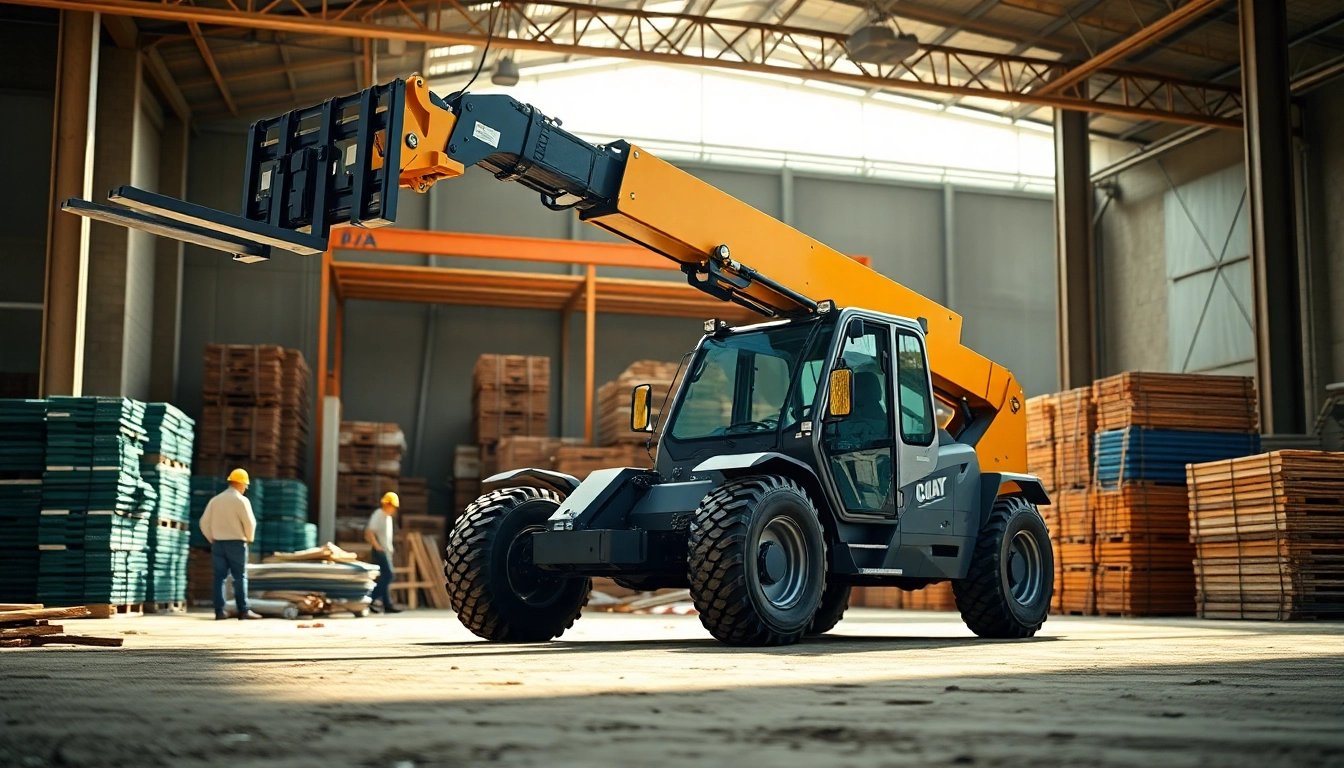
A telehandler, or telescopic handler, is a type of lift truck that combines the functionalities of a traditional forklift with a crane. It features a boom that extends upward and outward, allowing for significant lift height and horizontal reach. This specialized equipment allows operators to maneuver materials at various angles, enhancing their capability to lift, carry, and place loads that typical forklifts cannot. Telehandlers come in various sizes, with improvements in technology enabling more precise control and safety features, making them ideal for diverse construction tasks.
Key Advantages of Using a Telehandler
Telehandlers offer numerous advantages that make them indispensable on construction sites:
- Versatility: Equipped to handle various attachments such as forks, buckets, and winches, telehandlers can perform multiple tasks, reducing the need for additional equipment.
- Improved Reach: With an elevated boom, telehandlers can lift loads to great heights while providing significant horizontal reach, making them ideal for stacking materials or reaching areas that are otherwise inaccessible.
- Rough Terrain Capability: Many telehandlers are designed to navigate rough terrains, making them suitable for outdoor work sites that lack paved surfaces.
- Enhanced Safety Features: Modern telehandlers incorporate advanced safety systems to prevent tip-overs and ensure proper load management, enhancing operator safety.
- Efficiency: The ability to quickly and easily change attachments or reposition loads minimizes downtime, improving overall workflow on-site.
Common Applications in Construction
Telehandlers are utilized across various applications in the construction industry, including:
- Material Handling: Transporting heavy building materials such as bricks, concrete blocks, and lumber.
- Site Cleanup: Assisting with debris removal and cleanup efforts.
- Elevating Workers: As a platform to lift workers to elevated tasks using specific attachments.
- Heavy Equipment Loading: Loading and unloading materials onto vehicles or other heavy equipment.
Telehandler Features and Specifications
Engine Power and Performance
The engine power of a telehandler is a crucial aspect that directly affects its performance capabilities. Most telehandlers are equipped with diesel engines, optimized to provide high torque at low RPMs. This characteristic is significant for tasks involving heavy lifts and varying terrain. Additionally, many telehandlers feature eco-mode options, allowing operators to conserve fuel during lighter tasks without compromising performance.
Lift Capacity and Reach
When evaluating telehandlers, lift capacity is a key consideration. Typical telehandlers have lift capacities ranging from 5,000 to over 12,000 pounds. The maximum lift height varies from 20 to 60 feet, with some models offering extension booms for added reach. It’s essential to match the lift capacity and reach to your specific project requirements to ensure safe and efficient operation.
Attachments and Accessories
Telehandlers are uniquely designed to accommodate a range of attachments, which should be selected based on the tasks at hand. Common attachments include:
- Forks: Used for lifting and transporting pallets of materials.
- Buckets: Ideal for excavation tasks or moving loose materials.
- Jibs: Extends the reach for lifting tasks in tight spaces.
- Work Platforms: Secures a safe platform for workers at height.
Operational Best Practices for Telehandlers
Safety Guidelines for Operators
Ensuring safe operation of telehandlers is paramount due to their power and versatility. Key safety guidelines include:
- Regular training and certification for operators to enhance knowledge of machinery capabilities and safety protocols.
- Conducting daily inspections for mechanical integrity, focusing on hydraulic systems, tires, and braking systems.
- Utilizing spotters when maneuvering in tight spaces to avoid collisions and ensure clear pathways.
- Understanding weight distributions and boom positioning, ensuring loads are well within operational limits.
Maintenance Tips and Considerations
Proper maintenance ensures the longevity and reliability of telehandlers. Essential maintenance practices include:
- Scheduling regular service intervals for engine checks and hydraulic fluid replacements.
- Inspecting tires for wear and pressure to maintain optimal performance and safety.
- Lubricating moving parts to prevent wear and ensure smooth operation.
- Keeping the machine clean to prevent debris buildup that can interfere with moving components.
Effective Usage in Various Environments
Telehandlers are effective in diverse environments ranging from construction sites to agricultural settings. For construction sites, operators should be familiar with terrain challenges and adapt their techniques accordingly. In softer terrains, ensure the telehandler has sufficient stability and consider using appropriate attachments for balancing loads. In urban settings, planning the transport route ahead of time minimizes the risk of hindrances or complications.
Comparing Telehandlers with Other Equipment
Telehandlers vs. Forklifts
While both telehandlers and forklifts are used for lifting, their functionalities differ significantly. Forklifts excel in transporting materials over shorter distances on flat surfaces, while telehandlers offer extended reach and versatility, often suited for construction tasks requiring significant height and horizontal movement. Thus, telehandlers become a more appropriate choice for varied site conditions and diverse applications.
Telehandlers vs. Cranes
Telehandlers and cranes serve distinct purposes within construction and material handling. Cranes are designed for lifting heavy loads vertically across vast distances, typically achieving greater heights than telehandlers. On the other hand, telehandlers provide flexibility and mobility on unequal terrains, making them advantageous for tasks where horizontal movement is required alongside vertical lifts.
Pros and Cons of Using a Telehandler
As with any piece of equipment, there are pros and cons to consider with telehandlers:
- Versatile with multiple attachments.
- High reach capabilities in varied environments.
- Enhances operational efficiency.
- Higher initial investment cost compared to forklifts.
- May require specialized operator training.
- Potential for stability issues if not operated correctly.
FAQs About Telehandlers
What is the typical lift height of a telehandler?
The typical lift height ranges from 20 to 60 feet, depending on the model and design specifications.
Can a telehandler be used on rough terrain?
Yes, telehandlers are specifically designed for rough terrains, enabling effective operation even in challenging conditions.
What types of loads can a telehandler lift?
Telehandlers can lift various loads, including construction materials like bricks, wood, and equipment, with capacities typically ranging from 5,000 to 12,000 pounds.
Are telehandlers suitable for indoor work?
While telehandlers can operate indoors, ideal conditions involve sufficient height and space to utilize their full capabilities effectively.
How often should a telehandler be maintained?
Regular maintenance is recommended every 250 hours of operation or as outlined by the manufacturer’s guidelines, ensuring optimal performance and safety.